
Ken Ganley Toyota Pittsburgh

Blog / Ken Ganley Toyota PA Service

Blog

All Ken Ganley Toyota PA Service Pleasant Hills Toyota Dealer Trims and Features Ken Ganley Toyota Pittsburgh Performance And Advanced Technology Pleasant Hills Toyota Service Pleasant Hills Lease Toyota Camry Ken Ganley Toyota PA Toyota RAV4 Toyota Tundra Toyota Crown Toyota Prius Toyota Corolla Toyota RAV4 Plug-in Hybrid Toyota Safety Features Auto Detailing Toyota bZ4X Toyota GR86 Toyota Prius Plug-in Hybrid Toyota Sequoia Genuine Toyota Parts Tacoma Toyota GR Supra Toyota Highlander Toyota RAV4 Hybrid Toyota Sienna Community Events Oil Change Pleasant Hills Used Cars Toyota 4Runner Toyota Accessories Toyota Financing Toyota Highlander Hybrid Toyota Land Cruiser Toyota Maintenance 2025 Grand Highlander Hybrid 2025 RAV4 Hybrid 2026 Toyota Tacoma Towing Camry Hybrid Certified Pre-Owned Toyota Certified Pre-Owned Warranty Corolla Cross Hybrid Hybrid SUVs Hybrid vs. Gas Toyota Lease Options Local Business Pet Rescue Pre-Ordering Toyota Service Tips Tax Refund Tax Refund Pleasant Hills, PA Toyota Camry Hybrid Toyota Certified Pre-Owned Toyota Corolla Cross Toyota Corolla Hatchback Toyota Corolla Hybrid Toyota Grand Highlander Toyota Grand Highlander Hybrid Toyota Reliability Toyota Safety Sense 3.0 Toyota SUV Toyota Transmission Toyota Tundra i-FORCE MAX Toyota Venza Trade-In Your Vehicles
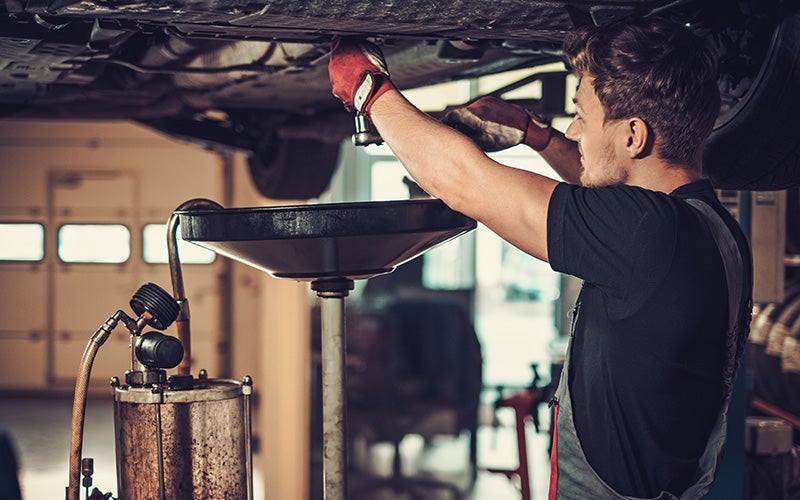
A Toyota service attendant doing a regular oil change in Pleasant Hills, PA.

The Importance of Regular Oil Changes for Toyota Vehicles

Regular oil change s are a simple yet effective way to maintain your Toyota's performance and ensure its longevity. Visiting your Toyota dealer at the right intervals will make a significant difference. The Importance of the Oil Change Oil is vitally important to the engine because that lubricates all those moving parts. Your engine is a hot and messy environment, with a lot of friction as metal moves around. Metal grinding against metal accelerates wear on all parts while oil lubrication prevents this by ensuring smooth operation. more Oil is also important because it cools the engine. As it moves through, it carries away some of the heat and works, along with your cooling system, to prevent overheating. Modern synthetic oil also protects your vehicle against rust and corrosion and has special detergents in it that stop carbon deposits from building up. Why Does It Need to Be Changed? Fresh oil can do all the things mentioned above, but over time, it starts to degrade for a variety of reasons. The constant exposure to heat, grime, and road chemicals are one issue. In addition, as it moves through the engine, it picks up tiny metal shavings. The oil filter filters these out for quite a while, but eventually the filter gets full and then the oil starts to get full, too. If you're running with old, dirty oil, you're going to notice a reduction in performance and fuel efficiency. Signs It's Time to Visit the Toyota Dealer for Fresh Oil Color Check your oil occasionally using the dipstick. The oil should be amber and fairly clear. If it's starting to look dark and dirty, it's time for a change. You should also check the level to make sure it's high enough. Oil or Check Engine Light Your Toyota is equipped with a specific oil light, but oil issues might also trigger the check engine light. If either illuminates, it’s a good idea to visit your dealership for a thorough check-up. You See Exhaust or Smell Oil You shouldn’t see smoke coming from your exhaust; what you may notice in cold weather is vapor, which is normal. However, if you do see smoke, it could indicate that oil is leaking and burning inside the engine. An oil leak might also present as a puddle in your driveway, though it’s possible for oil to leak without any visible signs. Additionally, a noticeable oil smell inside the car often suggests a leak. If you observe any of these issues, it’s advisable to have your vehicle inspected at your dealership. If it's time for fresh oil, come see us at Ken Ganley Toyota PA of Pleasant Hills, PA today.
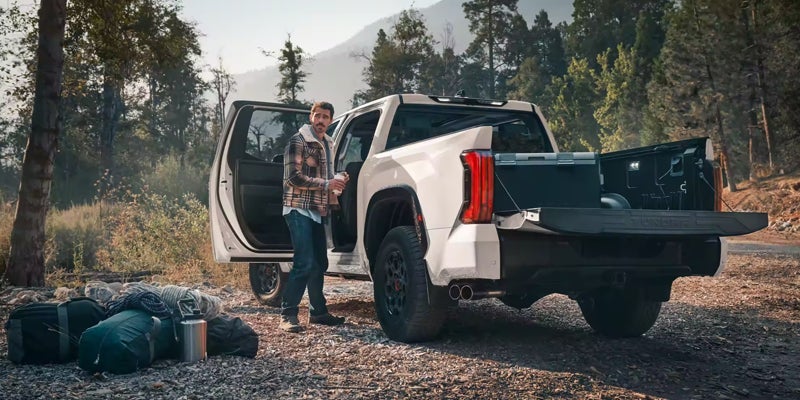
A 2024 Toyota Tundra packed up for a winter camping trip after getting seasonal maintenance in Pleasant Hills, PA

Winter Readiness: Preparing Your Toyota for the Cold

Are you ready for winter? It comes on us a lot faster than we're ready for sometimes, but Toyota winter maintenance can give you confidence that you're ready, whatever the weather might bring. 1. Check and Change the Oil Your dealer can tell you whether the oil you have is right and get you a fresh batch. Synthetic oil will flow much better at low temperatures and doesn't need a lot of time to warm up. This means your engine is protected quickly, without you having to waste gas for five minutes letting things come to temperature. We'll also make sure that your oil is exactly the right specs. more 2. Check the Tires By law, tires in PA need a minimum of two adjacent treads with at least 2/32 of an inch of tread remaining (if your vehicle weighs more than 10,000 pounds, you need twice that much). But what any good mechanic will tell you is that 3/32 of an inch of tread is required if you really want to be safe in cold, wet conditions. This is also the time to consider snow tires. Pennsylvania allows studded snow tires from Nov 1 to April 15th, and you can use non-studded snow tires at any time. Both types of tires use a type of rubber that provides superior performance and grip in the cold. 3. Check the Battery The batteries in our cars go through a lot during the summer, and that means when the first deep snow shows up, they can be severely compromised. We'll assess the battery and replace it if it's weak. 4. Check Wipers and Lights You need to be able to see very well on the road, not only with darkness coming on earlier during the winter but also with the possibility of winter weather. Now is the time to have us install new wipers if they are needed and check all your bulbs to be sure you're going to be able to see clearly on the road ahead. 5. Ensure the Antifreeze Is Right Your antifreeze is also your coolant, and it's one of the most important chemicals in your car. It stops things from overheating in the summer, and in the winter, it prevents water from freezing, expanding, and destroying your engine. We'll test the strength of your antifreeze to make sure it can handle Pennsylvania winters and that you have a full tank. These are just some of the crucial maintenance tasks we'll take care of when you come see us for winter maintenance. Make an appointment with us at Ken Ganley Toyota PA in Pleasant Hills, PA now and be ready for the cold.

Check the wheel alignment of your 2024 Toyota Camry Hybrid in Pleasant Hills, PA

Wheel Alignment: Keeping Your Toyota on the Straight Path

Proper wheel alignment is the precise adjustment of your Toyota's suspension system so that your tires meet the road at the correct angles. Alignments from the qualified technicians at your Toyota dealership will improve your driving comfort and safety and your Toyota's performance. Importance of Alignment The correct alignment will let you have a far quieter, safer, and smoother ride. It will improve handling and stability, evenly distribute your car's weight across the tires, reduce uneven brake pads and tire wear, and make them last much longer. You will also get better gas mileage because proper alignment reduces rolling resistance, which strains your engine and causes it to burn more gas. more The Process of Alignment Alignment is all about tweaking your Toyota's suspension by adjusting the wheel angles, such as the camber, toe, and caster. The right camber, toe, and caster adjustments will ensure that the tires make contact with the road at the correct angles. Camber Positive or negative camber is the direction your wheels are tilting when seen from the front. They could be either tilting inward or outward. The correct camber will ensure safe cornering and prevent excessive wear on the inside or outside of your tires. Toe The toe angle is the direction in which the wheels point when seen from above. Both toe-in and toe-out angles need to be adjusted to minimize tread wear. Caster A positive caster tilts the steering axis towards you. A negative caster tilts it towards the front of your car. The correct caster will improve steering, cornering, and stability. Signs of Misalignment When you stand in front of your Toyota, the wheels should face straight ahead, but if they are cockeyed, tilting inward or outward, they could be misaligned. You will notice your steering wheel is off-center, your car will veer to one side, and the tires will wear unevenly, resulting in road noise and vibrations you'll feel in the steering wheel. If you notice any of these issues, visit us as soon as possible for an alignment. Professional Alignment Services Bring your car to us every two years for an alignment check to increase your driving comfort and safety and save you some money. If you notice irregular tire tread wear, drive over obstacles on the road, hit a curb, or even a pothole, it will knock your wheels out of alignment, which is when alignment correction is needed. Proper alignment increases handling and safety while helping you save money on brake pads, tires, and gas. If your vehicle is shaking, pulling to one side, or your tires are wearing unevenly, swing by Ken Ganley Toyota PA in Pleasant Hills, PA, today for an alignment to enjoy a smoother and safer ride.

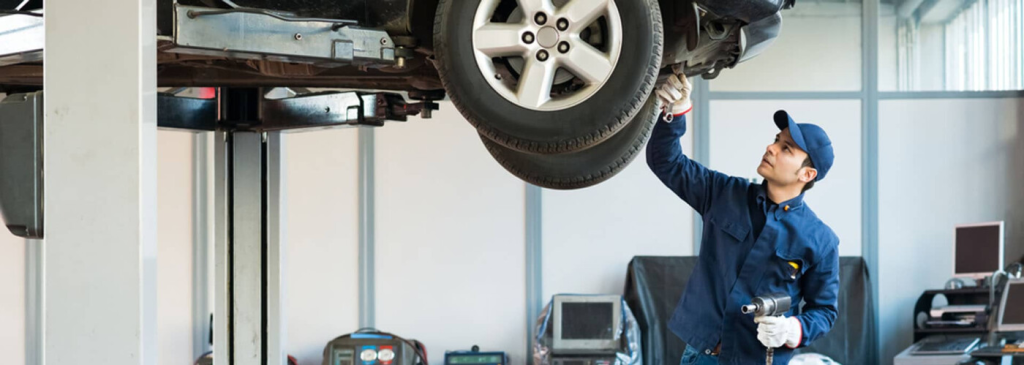
A Toyota technician working on your vehicle near Pleasant Hills, PA

Toyota Dealership Services: Beyond Expectations

Your Toyota is a great vehicle, and you want to be able to enjoy it for as long as possible. Regular maintenance is cost-effective, as it reduces future repair bills by enabling us to fix minor issues before they become large problems. As your Toyota dealer, we'd like you to know more about some types of Toyota service we offer. Tire Rotations Your tires take a lot of beating over time. They're constantly exposed to friction as you drive, producing unavoidable wear and tear. What some drivers don't know is that each tire position also generates additional damage on individual sections of a tire. If the tire remains in the same position, it will wear out faster. more A tire rotation solves this problem. We shift each tire to a new position, and the positions the tires move to depend on the type of drivetrain you have. An FWD, for example, concentrates most of the weight in the front and this increases front tire wear. Rotating the tires spreads wear more evenly, enabling each tire to naturally abrade at a similar rate, which increases their lifespan. Coolant Replacement Coolant plays a vital role in your engine, as it is naturally capable of absorbing heat. It's pumped through your engine and absorbs heat from the hot engine components as it moves. When the coolant reaches the radiator, it enters rows of aluminum tubes. Airflow in through the radiator grill flows over the tubes and removes the heat. Over time, coolant becomes thick and sluggish, which slows it down and leads to an increase in engine temperature. In addition, older coolant becomes corrosive and can damage engine components. We solve this problem by draining the old coolant. We then add new coolant mixed with a cleanser and run it through your engine to remove any traces of the corrosive coolant. The coolant is then drained again and replaced with fresh coolant. Brake Pad Replacement Brake pads fit into the calipers and have a friction-producing material covering. When you hit the brakes, the calipers close on the wheel rotors, and the friction material produces friction against the spinning rotors, which brings them to a stop. As time passes, the material covering gradually wears down and your brakes become less effective. You'll always know if you have one or more worn pads, as they produce high-pitched screeching noises when you brake. This sound is caused by a metal spike in the pad material that scratches against the rotor as a warning the pad has worn down. We can replace any worn pads within minutes. Visit our service department today at Ken Ganley Toyota PA in Pleasant Hills, PA.

Contact Us

Fill out this form below and we'll contact you shortly
*Required Fields